Arabic grill and barbecue restaurants
Charcoal grills and mangal stations produce sparks and heavy smoke. A mist line over the filters is the first thing to discuss with your consultant.

A water mist hood is a stainless steel extraction hood with a manifold of fine water nozzles built into the canopy. The mist cools the exhaust, wets grease and catches sparks from solid-fuel cooking such as tandoors and charcoal grills. FIAMMA can fabricate its SUS304 hood with the manifold planned in; approval stays with your consultant and Civil Defence.
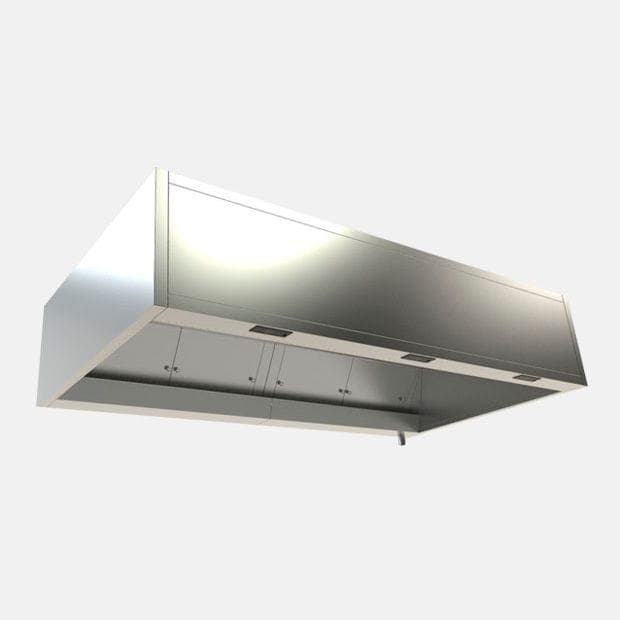
Search for a water mist hood in the UAE and you will find a lot of product pages that say the same three things: stainless steel, nozzles, Civil Defence. What they rarely explain is what the mist actually does, which of your appliances really call for it, and how it differs from the fire suppression system your consultant may already have specified.
This page is written for the person who has to decide. It covers how a mist hood works, which cooking equipment pushes you towards one, how it compares with a standard baffle hood and with a separate suppression system, what to ask a supplier, and how to keep it working. For the basics of hood sizing and airflow, start with our guide to commercial kitchen hoods.
A water mist hood is an ordinary extraction hood with one extra system built in: a pipe manifold carrying fine spray nozzles, normally positioned in the canopy over the filter bank and near the duct collar. When the system runs, a fine mist of water is released into the air stream leaving the cooking line.
What that mist does depends on the design, but three effects are usually described:
The usual trigger is solid-fuel or very high-heat cooking, where sparks and embers can be pulled into the hood and into the duct behind it. In UAE kitchens that most often means:
These three are often described as alternatives, but they do different jobs and are sometimes combined. This table sets out what each one does, what it adds, and what you still need to confirm.
| Option | What it does | What it adds | Things to confirm |
|---|---|---|---|
| Standard baffle hood | Captures heat and grease, separates grease through removable baffle filters, and passes air to the duct. | Simple build, low running cost, easy filter cleaning. | Duty class and airflow for the appliances below. Whether your consultant requires suppression in addition. |
| Hood with integrated water mist | Does everything a baffle hood does, plus a mist line in the canopy that cools the exhaust and wets grease and sparks. | Extra protection at the filters and collar for solid-fuel and high-heat cooking. Pipework planned into the hood. | What the mist is accepted as (capture, suppression or both). Water supply, drain and control requirements. Authority acceptance. |
| Hood with separate suppression system | A baffle hood fitted with a dedicated fire-suppression system, commonly a wet-chemical system with its own tank, pipework, nozzles and detection. | A purpose-designed system for cooking fires, with its own detection and shut-off arrangements. | Who designs and certifies it, how it interlocks with gas and fan shut-off, and its service and inspection schedule. |
In the UAE, commercial cooking hoods and their ducts are normally reviewed as part of the fit-out approval, and designs commonly follow the principles of NFPA 96. How much suppression is expected over a tandoor or charcoal grill, and in what form, is a matter for your fire consultant and Civil Defence. It is not something a hood supplier can settle for you, and it can differ between emirates, free zones and building types.
The practical point is to avoid two opposite mistakes. One is assuming a mist hood replaces a separate suppression system because the brochure says so. The other is paying for both without asking whether the authority would accept one. Put the question to your consultant with the appliance list and fuel type in front of them, and get the answer in writing before the hood is fabricated.
The FIAMMA hood is designed with UAE Civil Defence expectations in mind, but approval of any suppression arrangement rests with the authority, not with the fabricator.
Competitor figures for mist hoods contradict each other, even on the same page, so do not compare brochures by headline numbers. Ask for the design's own figures in writing, and use this list:
| Ask | Why it matters |
|---|---|
| What is the mist for: grease and spark capture, fire suppression, or both? | It decides how the authority will treat the hood and whether a separate system is still needed. |
| What water supply does the design need (pressure, flow, pipe size) and where does it connect? | Your plumber must provide it, and the figures vary from design to design. |
| Where does the drain connect, and what does it carry? | Mist water that falls out carries grease. It needs a proper drain route, and often a grease trap downstream. |
| What controls and power does it need, and does it interlock with the exhaust fan? | A solenoid valve and control box are typical. The interlock must be agreed with the MEP contractor. |
| How many nozzles, where are they, and how are they reached for cleaning? | Nozzles that cannot be reached get skipped at the monthly check. |
| Are removable baffle filters still fitted? | Grease still needs to be separated. Ask how many filters sit in the hood and how they lift out. |
| What material and gauge is the hood, and are the seams welded? | A wet hood needs a fully welded body. The FIAMMA hood is SUS304 at 1.2 mm. |
| What documents can you supply for submission? | Drawings, nozzle layout and specification sheets save weeks of back-and-forth with the authority. |
A mist hood is a normal hood plus a small water system, so the routine is the hood routine with a few extra checks. The frequencies below are typical practice. Follow the supplier's manual where it differs.
FIAMMA's custom extraction hood can include an integrated water mist manifold, planned in during fabrication so that the nozzles sit over the filter bank and duct collar rather than being added afterwards. The hood is SUS304 at 1.2 mm with removable baffle filters and a welded drip channel, and it is custom-fabricated to your cooking line, from 1.2 m to 6 m or more.
Charcoal grills and mangal stations produce sparks and heavy smoke. A mist line over the filters is the first thing to discuss with your consultant.
A tandoor sends heat and embers straight up. The hood and its mist line need planning together with the oven position.
High gas output and flaring oil load the hood heavily, so duty class and mist options both matter.
A single solid-fuel station next to ordinary lines needs its own hood section, so the rest of the kitchen is not designed around it.
Cooking in front of customers raises the profile of smoke and sparks. Hoods here also need to look tidy in stainless.
The manifold is drawn into the hood during fabrication, so the nozzles sit where they should and the pipework is neat.
Mist cools the air leaving the cooking line, which is the point of the system over high-heat appliances.
Removable baffle filters and a welded drip channel keep daily cleaning short.
Length, collar position and manifold layout follow your drawing, with no catalogue size to adapt around.
We tell you what to raise with your consultant and Civil Defence rather than promising an outcome that belongs to them.
Equipment from the FIAMMA range that goes with this page.

Heavy-duty SUS304 stainless steel extraction canopy engineered for high-heat commercial cooking lines. Integrated baffle grease filters, welded drip channels, and an optional built-in water mist fire suppression manifold contain grease-laden vapor and suppress flare-ups at the source, keeping kitchens compliant with UAE Civil Defence fire-safety codes.

Heavy-duty open-burner gas cooking range built on a fully welded SUS304 stainless steel frame for continuous high-volume service. Cast-iron pan supports, independent burner valves, and an optional oven base combine high-heat output with the durability commercial kitchens demand day after day.

Under-sink or in-line stainless steel grease trap engineered to intercept fats, oils, and grease before wastewater reaches municipal drainage. Baffled internal chambers slow flow to separate FOG from water, helping commercial kitchens meet UAE municipality drainage compliance and avoid blocked lines.
Send your equipment list with the fuel for each appliance. We will draw the hood with the mist manifold planned in and tell you what to confirm with your consultant.
Last updated: