Restaurants and cafes
A processor or cutter, a prep table and a hand-wash sink are enough to speed up daily mise en place and keep raw and cooked zones apart.

Food preparation equipment is everything that cuts, slices, mixes and portions food before it is cooked: food processors, vegetable cutters, meat slicers, dough mixers and the stainless tables and chillers they sit on. FIAMMA supplies all of these, including SUS304 prep tables custom-fabricated to your drawing, so the whole prep area can be planned as one zone.
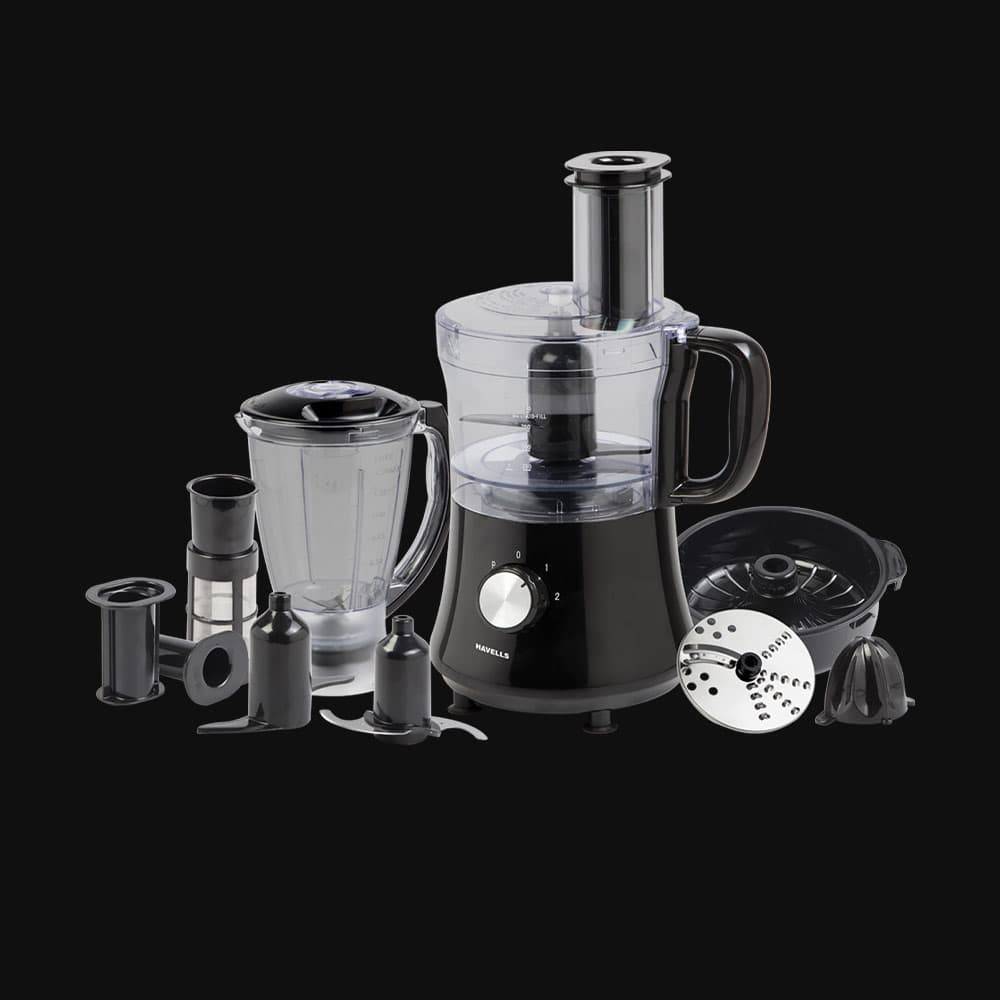
Prep is where most commercial kitchens lose time without noticing. A cook spends forty minutes cutting vegetables by hand that a machine would finish in ten, or a slicer is bought that is too big for the counter, or raw meat and salad share a table because there was nowhere else to put it. None of these show up on the equipment list, but all of them show up in labour cost and in inspection reports.
This page takes the practical view: which machine suits which task, how to split prep into zones, how to size capacity without overbuying, and what to check on guards and cleaning. For the stainless tables and counters around the machines, see our stainless steel kitchen equipment page. If you already know what you need, send the list through the contact page.
Prep equipment covers four groups: machines that cut or slice, machines that mix or knead, work surfaces such as tables and sinks, and cold prep such as prep chillers. The question is not just which machine to buy but where it goes.
Most well-run kitchens divide prep into separate zones, each with its own machines, tables and tools, so that raw food never shares a surface with food that is ready to eat:
Start from the task, not the machine name. The table below links the common prep jobs to the equipment that does them and what to check before you buy.
| Task | Equipment | What to check |
|---|---|---|
| Slicing, dicing, grating and julienning vegetables and cheese | Commercial food processor or vegetable cutter | Hourly output in kg, number and type of discs, hopper and feed-chute size, and how quickly parts come apart for washing. |
| Slicing cooked meat, cold cuts and cheese | Meat slicer | Blade diameter, gravity or vertical feed, carriage guard, built-in sharpener, and the thickness range confirmed on the model you buy. |
| Kneading bread, pizza and pastry dough | Spiral dough mixer | Bowl litres and, more usefully, maximum dry flour in kg, two speeds, safety grid, and three-phase power. |
| Keeping fried food hot and crisp before service | French fries warmer | Heating type, drain board, footprint beside the fryer and the voltage. |
| Assembling salads, sandwiches and pizzas | Pizza and salad prep table | Number of GN pans, cabinet temperature, hood cover and cutting-board length. |
| Working space between appliances or a dedicated prep station | Infill table in SUS304 | Exact width, depth and height, backsplash, undershelf and adjustable feet. |
Colour-coding is the simplest way to keep zones separate in a working kitchen. Boards, knives, containers and sometimes cloths follow a colour, and staff learn to never cross them. A commonly used scheme is red for raw meat, blue for raw fish, yellow for cooked meat and poultry, green for salad and fruit, brown for root vegetables and white for dairy and bakery. It is a convention rather than a rule, so confirm what Dubai Municipality or your food-safety consultant expects.
Equipment follows the same logic:
Nameplate capacity is a ceiling, not a daily figure. A cutter rated at 200 kg an hour rarely delivers that, because staff stop to refill the hopper, change discs and clear the chute. As a rough rule, plan on 40 to 60 percent of nameplate.
A vegetable example. A kitchen preparing 300 salads a service at about 150 g of vegetables each needs about 45 kg of cut vegetables. A cutter or processor in the 150 to 200 kg per hour range gets there in well under an hour even at half its rated output, so you do not need anything bigger.
A dough example. A pizzeria making 150 pizzas of 250 g each needs about 37.5 kg of dough. At around 60 percent hydration, dough weighs roughly 1.6 times the flour, so that is about 23 kg of flour. A mixer rated at 20 kg of dry flour would mix it in two batches. Size by maximum flour weight rather than bowl litres, and do not load to the limit with stiff doughs.
| Machine | Listed specification | Typical use |
|---|---|---|
| Spiral dough mixer | 50 L bowl, up to 20 kg dry flour, 2.2 kW, three-phase, two speeds | Bread, pizza and pastry dough in bakeries and pizzerias |
| Commercial food processor | 550 W, 220 to 240 V, up to 150 kg/hour, interchangeable discs | Slicing, grating and shredding vegetables and cheese |
| Vegetable cutter | 750 W, 220 V, up to 200 kg/hour | High-volume shredding, slicing and dicing in central kitchens |
| Precision meat slicer | 300 mm blade, 250 W, 220 V, gravity feed, built-in sharpener | Deli counters, supermarkets and caterers |
| French fries warmer | 1.0 kW, 220 V, infrared heating | Holding fried food next to the fryer |
| Pizza and salad prep table | 9 x GN 1/3 pans, 1800 x 800 x 1050 mm, +2 to +8 °C | Assembling pizzas, salads and sandwiches |
| Infill table | SUS304, 1.2 mm, 600 x 700 x 850 mm standard, customisable | Prep surface between cooking appliances |
Prep machines cause some of the commonest kitchen injuries, and they are also where food residue hides. Two things matter more than any extra feature: guards that cannot be bypassed, and parts that come apart easily.
The machines are the visible part of prep, but the tables, sinks and chillers decide whether the area works. A table that is the wrong height, or a sink that sits across the walkway, costs you every shift.
A good prep layout moves food in one direction and avoids crossing paths. For a typical restaurant or central kitchen:
Prep machines are simple, which is why neglect is common. A short routine extends their life and keeps results consistent.
A processor or cutter, a prep table and a hand-wash sink are enough to speed up daily mise en place and keep raw and cooked zones apart.
Higher volumes call for a bigger cutter, a spiral mixer and several prep tables arranged as stations, so tasks do not queue behind one machine.
A spiral dough mixer, a dough table and a chilled pizza prep table cover the main steps from dough to topping.
A gravity-feed slicer, a dedicated raw-meat table and clear separation of cooked cuts make the counter safe and quick.
Large functions need cold prep and portioning stations that can be set up and cleaned down fast, with custom tables sized to the room.
Compact prep zones with a chilled prep table and a small cutter save floor space for the cooking line.
Cutters, mixers, prep chillers and custom stainless tables are supplied together, so heights and positions agree on the drawing.
SUS304 infill tables and prep stations are custom-fabricated to your layout rather than chosen from a standard size list.
Capacity, power and dimensions are listed on each product page, so you can compare before you ask for a quotation.
Guards and interlocks on the processor, cutter and mixer are part of the machines, not extras.
We help you size to your actual volume so you do not pay for capacity you will not use.
Equipment from the FIAMMA range that goes with this page.

Heavy-duty commercial food processor and vegetable prep machine. Features a wide hopper for large ingredients, continuous feed chute, and safety micro-switches to prevent operation when open. Comes with interchangeable disc blades for slicing, dicing, grating, shredding, and julienning.

Heavy-duty gravity feed meat slicer designed for deli counters, supermarkets, and catering companies. Features a hard-chromium alloy blade, built-in dual-stone blade sharpener, adjustable slice thickness dial from 0 to 15 mm, and a secure food carriage guard.

Industrial vegetable cutter engineered for rapid shredding, slicing, and dicing of green vegetables, root crops, and fruits. High-quality construction and safety limit switches ensure optimal operator protection during commercial prep cycles.

Heavy-duty spiral dough mixer designed for bakeries and pizzerias. Features a dual-motor system driving the bowl and hook independently, safety grid protection with auto shut-off, two mixing speeds, and a reverse bowl rotation setting. Delivers perfect gluten development for bread, pastry, and pizza doughs.

Overhead infrared heating station and heated base unit designed to maintain fried foods at crisp, serving-hot temperatures. Removable curved perforated drain board keeps foods drained of excess oils, ensuring texture and quality are preserved.

Combination preparation table and under-counter chiller cabinet. Top section accommodates GN 1/3 cooling ingredient pans under a retractable insulated hood cover. Heavy-duty food-grade polyethylene cutting board runs along the front, providing an optimal workspace for assembling pizzas, salads, and sandwiches.

Custom manufactured stainless steel infill work table. Ideal for filling gaps between heavy cooking appliances or creating dedicated prep stations. Constructed from premium heavy-gauge SUS304 stainless steel with sound-deadening under-panel reinforcement, adjustable bullet feet, and a rear backsplash to keep walls clean.
Send your menu, daily volumes and the kitchen layout. We will suggest machines and tables by task and zone and come back with a quotation.
Last updated: