Restaurants and hotel kitchens
An upright chiller and freezer on the line, a meat chiller in the butchery area and prep counters at the cold station give each task its own temperature zone.

A chiller keeps food just above freezing, typically around 0 to +5 °C, so fresh meat, dairy, produce and pastry stay safe for days. A freezer holds food at -18 °C or colder for weeks. Most kitchens need both: chillers for what you use this week, freezers for longer stock. FIAMMA supplies upright freezers, meat chillers, prep counters and display chillers.
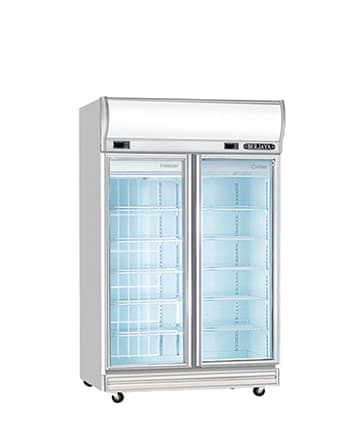
Ask five kitchen managers what the difference is between a chiller and a freezer and you will get five slightly different answers, because in the UAE the word "chiller" is used loosely. It can mean a commercial refrigerator, a bottle cooler, a walk-in room or even a refrigerated van. In this guide, a chiller is simply a reach-in or counter-height cabinet that holds food cold but not frozen.
The real question is rarely "which one". It is which mix, in which format, and where in a hot kitchen it can actually keep its temperature. We cover temperatures, what belongs where, the cold-chain reasoning behind it, upright versus under-counter versus prep counter versus display, capacity planning, and the mistakes that come up most often. When you are ready to price a set-up, the commercial chillers and freezers page lists what we supply, and the contact page is the quickest way to get a quotation.
Both remove heat from the cabinet, but they are set to very different targets, and that difference drives everything else: compressor size, insulation, running cost and what you can safely put inside.
A chiller holds food between roughly 0 and +5 °C. Many commercial units are rated for a wider band, commonly +2 to +8 °C, so the controller is set at the cold end for high-risk food. Nothing freezes, which keeps meat, dairy and produce ready to cook or serve. A freezer holds food at -18 °C or colder, which stops bacterial growth and slows quality loss for weeks or months. It needs a larger compressor, thicker insulation and more frequent defrosting than a chiller of the same size.
The figures below are typical ranges, not guarantees for any one model. Always read the temperature range on the specific unit.
| Unit type | Typical holding range | What it is for | How long food keeps |
|---|---|---|---|
| Commercial chiller (reach-in) | About 0 to +5 °C; many units rated +2 to +8 °C | Daily-use stock: dairy, produce, sauces, prepared items | Days to about a week, depending on the food |
| Meat chiller | About -2 to +4 °C (the FIAMMA meat chiller is rated -2 to +4 °C) | Fresh meat, poultry, some dairy | A few days |
| Freezer (storage) | -18 °C or colder (the FIAMMA upright freezer is rated -18 to -22 °C) | Frozen stock, bulk buys, bread dough, ice cream | Weeks to months |
| Prep counter or display chiller | Typically +2 to +8 °C | Ingredients in open pans, cakes and pastry under glass | Hours to a day or two; a working store, not bulk storage |
A simple rule works for most menus: if you will use it within a few days, it goes in the chiller; if you are holding it longer, it goes in the freezer. The table covers the usual items, with the details that cause problems when they are ignored.
| Food | Where it goes | Notes |
|---|---|---|
| Fresh meat and poultry | Meat chiller, or the bottom shelf of a chiller | Coldest zone, in covered trays, always below ready-to-eat food so nothing drips onto it. |
| Fish and seafood | Chiller (or a dedicated chiller) | Most perishable item in the kitchen. Keep it separate from other food and use it first. |
| Dairy and eggs | Chiller | Keep away from the fan outlet so cartons and cream do not partially freeze. |
| Fruit and vegetables | Chiller, in the warmer zone | Some tropical fruit dislikes cold, so ask your supplier. Leafy veg needs airflow, not a packed shelf. |
| Cut salads, sauces, marinades | Prep chiller or a chiller | Label with the date and time prepared. |
| Cakes, mousses, cream pastries | Pastry display chiller | Glass fronts take more heat than a solid door, so check the cabinet is rated for your shop conditions. |
| Frozen meat, chips, dough | Freezer | Store in sealed packs to prevent freezer burn. Do not refreeze food that has fully thawed. |
| Ice cream | Freezer for storage | Serving cabinets are usually run a little warmer than storage freezers, so do not use one as the other. |
| Cooked food that must be kept | Neither, at first | Cool it quickly, or hot-hold it, before it goes into a chiller. Putting a large hot pot in a cabinet warms everything around it. |
Food safety rules in most places are built around one idea: bacteria multiply fastest in a middle band of temperature, usually described as roughly 5 to 60 °C and commonly called the danger zone. Authorities word the exact band differently, so confirm the figure your inspectors use. Chillers hold food just below that band and freezers well below it.
The cold chain is the unbroken run from delivery to service. It fails at the weak link, which is usually not the cabinet but what happens around it:
Once you know chiller or freezer, the next decision is format. It is mostly about how often staff open the door, how much floor space you can spare, and what the food is doing: being stored, being prepared, or being sold.
| Format | Best for | Watch out for |
|---|---|---|
| Upright (reach-in) | Main storage on the cooking line or in a back-of-house store. FIAMMA supplies an upright freezer and a meat chiller. | Floor footprint, and door-opening losses if one cabinet serves everyone. |
| Under-counter | Small kitchens, bars and cafes, or a second cabinet beside a station to cut walking. | Limited height and volume; the compressor is close to the floor, so airflow and cleaning matter. |
| Prep counter (saladette, pizza table) | Assembly: salads, sandwiches, pizza. The pizza and salad prep table holds nine GN 1/3 pans over a chilled cabinet. | Open pans lose cold fast. Keep the unit away from fryers, ovens and direct sun. |
| Display chiller | Selling food: cakes, pastry, desserts. Read the display chillers guide or look at our pastry display chiller. | Glass is the weak point for heat and fogging, so check anti-fog glass and the ambient rating. |
| Walk-in cold room | High volume: central kitchens, hotels, bulk buyers. | A construction and refrigeration job in its own right. Plan it with a cold-room contractor; this guide covers cabinets only. |
Capacity is easy to get wrong in both directions. Too little and staff stack boxes against the fan, which wrecks the airflow. Too much and you pay to cool empty air. The best method is to work from your menu, not from a catalogue litre figure.
A cabinet that works in a showroom can struggle behind a fryer in July. Kitchen ambient temperature is often well above the 25 to 30 °C many cabinets are tested at, and that is where capacity quietly disappears. Four things matter most:
If you only read one part of this page, use the table. Start from what you are doing, not what the cabinet is called.
| If you need to... | Choose | Why | Look at |
|---|---|---|---|
| Store a week of dairy, produce and sauces | Upright chiller | Easy access and good shelf layout for mixed daily stock | Commercial chillers and freezers |
| Store fresh meat or poultry safely | Meat chiller | A -2 to +4 °C range suited to raw protein | Meat chiller |
| Hold frozen stock, chips, dough or ice cream | Upright freezer | Holds -18 °C or colder with forced-air cooling | Upright freezer |
| Assemble salads, sandwiches and pizza | Prep counter | Cold pans at working height plus a cold cabinet beneath | Pizza and salad prep table |
| Sell cakes and pastry to customers | Display chiller | Glass front, LED lighting and a +2 to +8 °C range | Pastry display chiller |
| Hold large volumes for a central kitchen or hotel | Walk-in cold room | Volume that a row of cabinets cannot match | Speak to a cold-room contractor |
An upright chiller and freezer on the line, a meat chiller in the butchery area and prep counters at the cold station give each task its own temperature zone.
A pastry display chiller for customers, an under-counter chiller for dairy and an upright freezer for dough and frozen stock keep the front and back separate.
A prep counter with nine GN 1/3 pans holds toppings at working height, with an upright chiller beside it for restocking.
A dedicated meat chiller keeps raw protein at a steady cold temperature, away from dairy and produce.
Tight floors favour tall, narrow upright cabinets and under-counter units over wide counters.
Large batches and long storage call for a freezer for bulk stock and chillers sized for a full day of service.
Each unit is chosen for what it holds, so meat, dairy, frozen stock and display items each sit in the right temperature range.
FIAMMA's refrigeration lines specify SUS304 stainless steel for the interior and exterior, which suits humid kitchens and frequent washing.
Temperature range, capacity, dimensions and power are listed for each unit, so you can compare before you ask for a quote.
Uprights, a meat chiller, a prep counter and a display chiller cover storage, preparation and sales.
Send your menu and floor plan, and we will help you work out how many units and in which format.
Equipment from the FIAMMA range that goes with this page.

Single-door commercial upright freezer with forced-air ventilated cooling. Built with thick cyclopenthane insulation, self-closing magnetic door gaskets, digital control panel, and adjustable heavy-duty shelves. Designed to operate efficiently in hot kitchen environments up to 43°C ambient temperature.

Ventilated reach-in storage chiller specifically engineered for storing fresh meat and dairy products. Features a digital thermostat, auto evaporation tray, internal lighting, and high-performance compressor unit providing rapid cooling recovery when doors are opened.

Combination preparation table and under-counter chiller cabinet. Top section accommodates GN 1/3 cooling ingredient pans under a retractable insulated hood cover. Heavy-duty food-grade polyethylene cutting board runs along the front, providing an optimal workspace for assembling pizzas, salads, and sandwiches.

Premium glass-enclosed pastry showcase chiller designed for bakeries, coffee shops, and hotels. Features double-glazed curved front glass with defogging heaters, brilliant LED lighting under each glass shelf, automatic defrosting, and a high-efficiency digital thermostat. Dynamic fan cooling ensures stable temperature profiles.
Send your menu, floor plan and any ambient or space limits. We will help you decide how many chillers and freezers you need and in which format.
Last updated: