Display refrigeration · Pastry showcase · Shop display

Display Chillers in Dubai: Pastry, Cake and Shop Refrigeration

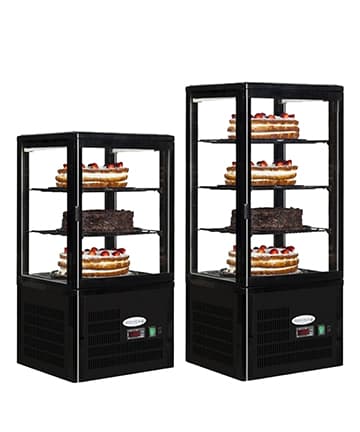
A display chiller is a refrigerated glass cabinet that shows food while holding it cold, usually at about +2 to +8 °C. FIAMMA supplies a double-glazed pastry display chiller with warm LED lighting and defogging glass, plus prep counters. For supermarket-scale display refrigeration, this page explains what to specify and invites your project brief.

Display Chillers in Dubai: Pastry, Cake and Shop Refrigeration

'Display chiller' covers a lot of ground in the UAE. A cake showcase in a café, a glass-door drinks cooler, a deli counter and a hypermarket multideck are all called display chillers, and they share little beyond the glass or the open front. Buying the wrong kind is a common and costly mistake, so this page starts by separating them.

FIAMMA supplies a pastry display chiller and refrigerated prep counters, and we would rather be clear about where that range stops. For bigger shop refrigeration such as multidecks and island cabinets we do not list a product range, so we explain how to choose and what to put in a brief. Send it through the contact page and we will tell you honestly what we can supply. For back-of-house storage cabinets, see our commercial chillers and freezers page.

What kinds of display chiller are there, and which one do you need?

The right type depends on what you sell, who serves it and how big the shop is. The temperatures below are typical working bands, not a promise for any one model.

Display chiller types, best use and what to check
TypeBest forTypical temperatureThings to check
Pastry and cake showcaseBakeries, cafés, hotel patisseriesabout +2 to +8 °CGlass quality and defogging, light colour, temperature evenness from top to bottom, access for cleaning.
Serve-over deli counterMeat, fish, cheese and cooked food served by staffabout 0 to +4 °C for raw meat and fish, about +2 to +8 °C for other itemsRear access, drainage, tray hygiene, glass angle and reflections.
Glass-door upright (drinks and packed food)Convenience stores, drinks, grab-and-goabout +2 to +8 °CDoor seal, LED lighting, how fast it recovers after door openings, shelf loading.
Open multideckSupermarket dairy, produce, ready mealsabout +1 to +8 °C depending on the productEnergy use, air curtain, store humidity, night blinds, plug-in or remote system.
Island or chest displayFrozen food, ice cream, promotionsabout -18 °C or lowerLids or glass, frost build-up, ambient heat, the load line.
Grab-and-go and sandwich displayCafés, petrol-station shops, office kiosksabout +2 to +8 °CFootprint, open or door front, holding chilled food at 5 °C or below.

FIAMMA's pastry display chiller: what the specification says

FIAMMA's Luxury Pastry Display Chiller is listed as a glass-enclosed showcase for bakeries, coffee shops and hotels. This is what the product page states, and what it does not.

Pastry display chiller: specification as listed on the product page
ItemAs listed
MaterialStainless steel SUS304 and double glass
GlassDouble-glazed, curved front
DefoggingInternal micro-heating wires to prevent fogging and condensation on the outer glass, described as working in UAE humidity
Temperature+2 to +8 °C, with fan-forced cooling for even temperature
LightingWarm LED on all levels, under each glass shelf
RefrigerantR290
Electrical220 V / 50 Hz / 650 W
Dimensions1200 × 750 × 1200 mm
Control and defrostDigital thermostat, automatic defrost
Not stated on the pageCapacity, shelf count, door type, weight, noise level and ambient rating. Ask for these in writing.

What temperature should a display chiller hold for cakes, chocolate and drinks?

One setting does not suit every product. Match the cabinet to what goes in it:

  • Cakes, pastries and mousses: about +2 to +8 °C. Cream and dairy-based desserts do best at the cold end.
  • Chocolate and pralines: usually kept warmer, around +12 to +18 °C. A standard pastry chiller at +2 to +8 °C is the wrong tool, so ask for a unit designed for it.
  • Raw meat and fish: about 0 to +4 °C, in a cabinet built for that duty.
  • Sandwiches, salads and cut fruit: the cold end of the range. Food codes commonly require chilled food at 5 °C or below, so confirm the limit with your food safety plan.
  • Drinks: typically +2 to +8 °C, with a glass door and plenty of shelf space.

Buying checks for bakery and café display counters

On a shop floor the cabinet is part of the sales pitch. These checks separate a showcase that sells from one that fogs, warms and looks tired within a season:

  • Glass. Double glazing keeps the outer pane warmer than single glass, so it fogs less and loses less cold. Curved glass looks good but costs more to replace. Ask about spare glass and who fits it.
  • Defogging. In UAE humidity the outer glass of a cold cabinet can mist over. A heated-glass or heater-wire system keeps the view clear. Ask whether it is always on or controlled, and what it adds to the power load.
  • LED lighting. LEDs add little heat. Warm white shows cakes and chocolate in natural colour, while cool white can turn cream grey. Check that every shelf has light, not only the top.
  • Temperature uniformity. Ask for temperatures at the top and bottom shelves and near the glass. Fan cooling gives a more even cabinet but can dry out unwrapped cake. Static cooling is gentler but slower to recover after the door opens.
  • Cleaning. Look for rounded interior corners, removable shelves, a drain or evaporation tray, and a back panel that opens for condenser access.
  • Shelving. Shelf depth and spacing should suit your trays, with a load rating for heavy cakes.
  • Stainless and finish. SUS304 resists cleaning products better than thinner finishes. Our page on stainless steel kitchen equipment explains grades and finishes.

Supermarket display chillers: what to know before you specify

FIAMMA does not list a supermarket multideck or island range. If you are fitting out a grocery, minimarket or hypermarket, this section explains the choices so your brief is right, and you can send it to us so we can confirm what we can supply and what you should source elsewhere.

The first decision is where the compressor lives, and the second is the format of the cabinet. The formats you will meet:

  • Multideck: an open or glass-door vertical cabinet for dairy, juice, produce and ready meals.
  • Island: a free-standing horizontal cabinet, open or lidded, for frozen food, ice cream and promotions.
  • Service counter: a staffed serve-over cabinet for deli, meat, fish and cooked food.
  • Glass-door vertical: a closed cabinet for drinks and packed food, the most energy-efficient of the group.
Plug-in versus remote condensing display cabinets
FactorPlug-in (self-contained)Remote condensing (central plant)
Where the heat goesInto the shop, from every cabinetTo a rack on the roof or in a plant room
InstallationPlace it and plug it in, easy to movePipework and a compressor rack designed for the project
Best forSmall shops, kiosks and a few cabinetsLarger supermarkets with many cabinets
Air-conditioning loadAdds to it, noticeably in hot weatherReduced inside the sales area
ServiceCabinet by cabinetCentral plant, needs a refrigeration contractor
Cost patternLower upfront per cabinet, more heat in the shopHigher upfront, often better at larger scale

Open front or glass door? Night blinds, energy and humidity

In a hot, humid country the cabinet is working against the room all day. These points decide how much it costs to keep it cold:

  • Open fronts sell more and cost more to run. They pull warm, humid shop air into the cabinet, which has to cool and dry it again. An air curtain limits this but does not stop it.
  • Glass doors cut energy. Closing the front typically reduces consumption by a large share, at the price of one more thing between the customer and the product.
  • Night blinds help. Covering an open cabinet overnight commonly reduces losses while the shop is closed.
  • Humidity matters. High shop humidity makes coils ice up and the cabinet defrost more often. Keep the sales area air conditioned and avoid placing cabinets next to entrance doors.
  • Ask for the tested ambient, in °C and humidity, not a general 'hot climate' claim. Our chillers and freezers page explains climate classes.
  • Check the refrigerant. Propane (R290) is flammable and the charge per cabinet is limited, which is one reason large open cabinets often use other refrigerants or a remote system.

Where to place a display chiller and how to keep it clean

A good cabinet in a bad spot performs like a poor one. A few rules cover most shops:

  • Keep it out of direct sun. A shopfront window adds heat and glare, and warms the glass.
  • Keep it away from drafts and heat. Air conditioning vents blowing at an open front disturb the air curtain. Ovens and coffee machines add heat close by.
  • Leave clearance for the condenser. Check the manual. Roughly 100 to 200 mm at the back and sides is common.
  • Wipe the glass daily with a soft cloth and a non-abrasive cleaner. Clean shelves and the drain weekly and the condenser every one to three months.
  • Do not overload. Stay below the load line and keep air gaps, and do not put warm trays straight into the cabinet.
  • Fitting out a bakery? Our bakery equipment page covers ovens, mixers and the rest of the production side.

How to brief us on a display chiller or shop refrigeration project

  1. Tell us what you will display and the temperature it needs: cakes, drinks, meat, packed food.
  2. Send the layout or a photo with dimensions, showing windows and sun, doors and air-conditioning.
  3. Say what you prefer: glass or open front, plug-in or remote, finish and lighting.
  4. We confirm what FIAMMA can supply from its range, and say clearly where it does not, instead of quoting something outside it.
  5. You receive the written specification for the matching unit: temperature, refrigerant, power, ambient rating and glass.
  6. Delivery, positioning and handover, including the daily glass wipe and the cleaning routine.

Where it is used

Bakeries and patisseries

A glass showcase for cakes and pastries on the shop floor, with a chiller or freezer behind for stock.

Cafés and coffee shops

A compact showcase beside the till sells desserts and sandwiches without a separate cold room.

Hotel lobby and banquet pastry

A showcase with clean glass and warm lighting that presents desserts at the standard guests expect.

Dessert parlours and chocolate shops

Chocolate needs a warmer band than cakes, so specify the product first and the cabinet second.

Grab-and-go and convenience counters

Sandwiches, salads and packed food kept at the cold end of the range behind glass.

Minimarkets and grocery corners

A bakery corner can run on a pastry chiller. For shelving lines and multidecks, send your brief so we can say what we can supply.

Benefits

Glass that stays clear

The pastry chiller is listed with double-glazed curved glass and a defogging system aimed at UAE humidity.

Warm LED lighting on every level

Lighting under each glass shelf shows cakes and chocolate in natural colour with little added heat.

SUS304 stainless steel and double glass

A cabinet that matches your counters and holds up to daily cleaning products.

R290 refrigerant listed

The pastry chiller is listed with R290, a natural refrigerant with very low global warming potential.

Honest about scope

We say what we supply and what we do not, so a supermarket brief gets a straight answer before you spend time on it.

Related products

Equipment from the FIAMMA range that goes with this page.

Frequently asked questions

What is a display chiller?
A refrigerated cabinet with a glass or open front that keeps food cold while customers can see it. The term covers pastry showcases, deli counters, drinks coolers and supermarket multidecks, which differ a lot in temperature, energy use and cost.
What temperature should a cake display chiller hold?
Typically about +2 to +8 °C. Cream and dairy-based desserts do best at the cold end. FIAMMA's pastry display chiller is listed at +2 to +8 °C.
Why does display glass fog in the UAE, and how is it stopped?
Humid air meets a cold pane and condenses. Double glazing keeps the outer pane warmer, and heater wires or heated glass keep it clear. FIAMMA's pastry display chiller is listed with double-glazed curved glass and an internal micro-heating system.
Can I keep chocolate in a pastry display chiller?
Usually not. Chocolate is typically held warmer, around +12 to +18 °C, than the +2 to +8 °C of a pastry chiller. Tell us the product so the cabinet is chosen for it.
What is the difference between plug-in and remote display chillers?
A plug-in cabinet has its own compressor and releases heat into the shop. A remote cabinet is cooled by a central rack on the roof or in a plant room, which keeps heat out of the sales area and suits larger supermarkets.
Should I choose an open multideck or a glass-door cabinet?
Open fronts sell more easily but pull in warm, humid air and cost more to run. Glass doors typically cut energy use by a large share. In hot, humid shops, many buyers choose doors for drinks and packed food and keep open fronts for the areas where access matters most.
Do you supply supermarket display chillers?
FIAMMA lists a pastry display chiller and prep counters, not a supermarket multideck or island range. If you are planning a shop, send us the layout and the products you will display and we will confirm what we can supply and what you should source elsewhere.
What refrigerant does the pastry display chiller use?
R290, which is propane. It has a very low global warming potential, and because it is flammable the cabinet carries a small limited charge that a trained technician should install and service.
How should I clean a display chiller?
Wipe the glass daily with a soft cloth and a non-abrasive cleaner. Take out and wash shelves and clear the drain weekly. Clean the condenser every one to three months, because a blocked coil makes the cabinet work harder and run warm.
What do I need to send to get a quotation?
What you will display, the temperature it needs, the space available and any photos of the site. Send it through the contact page or on WhatsApp. We supply across the UAE, including Abu Dhabi, Sharjah, Ajman, Ras Al Khaimah, Fujairah and Umm Al Quwain.

Related guides and solutions

Planning a display counter or shop refrigeration?

Send what you will display, the layout and the temperature it needs. We will confirm what FIAMMA can supply and give you the specification in writing.

Last updated:

Chat with us