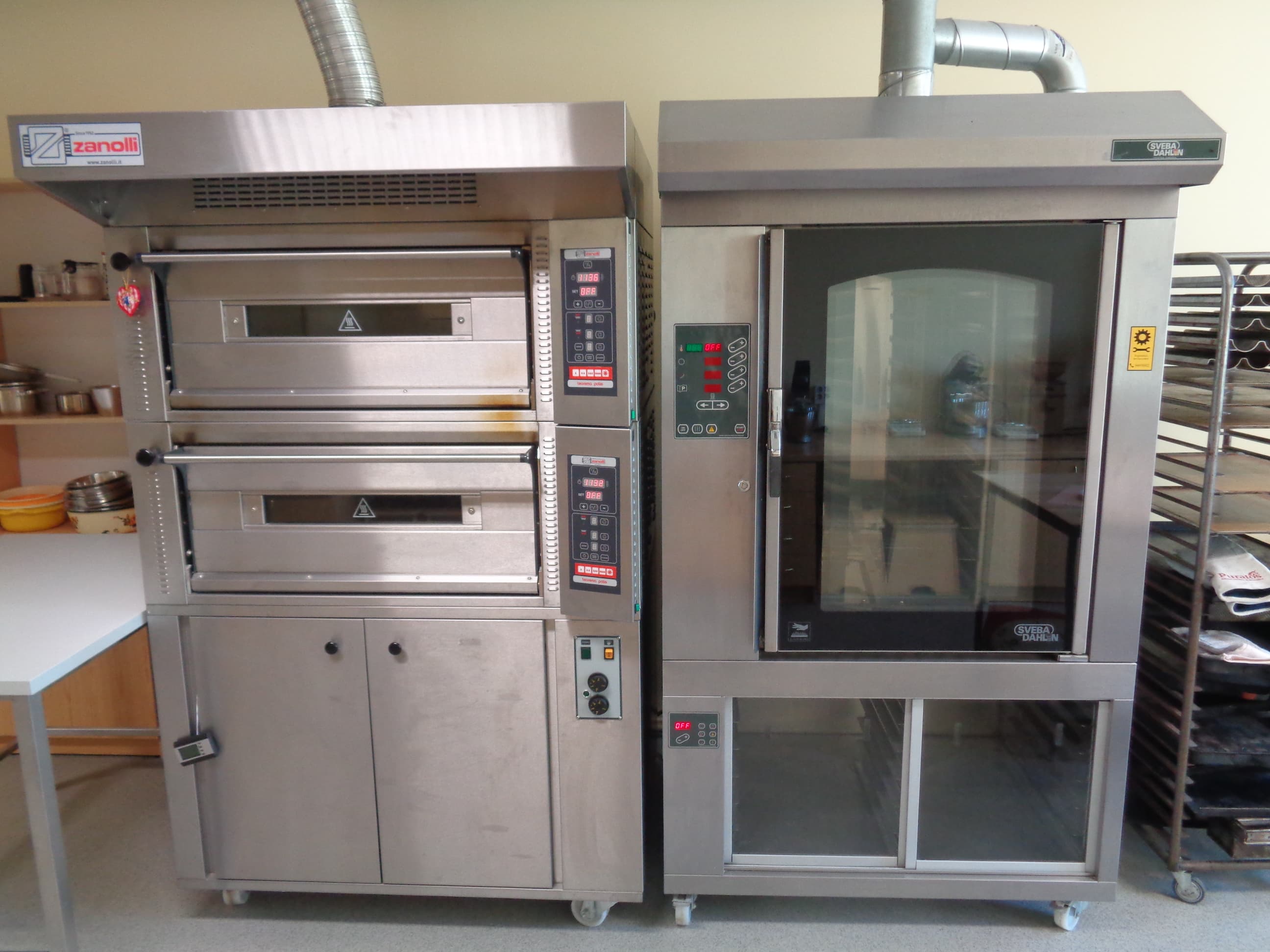
Food-service ovens · combi · deck · bakery

Commercial Ovens in Dubai

Commercial ovens are food-service ovens built for continuous professional use. The main types are combi, convection, deck, rotary rack, tunnel and pizza ovens. FIAMMA supplies a 10 GN 1/1 SUS304 combi oven (electric or gas) and a 2 to 4 deck stone-hearth bakery oven up to 300 °C per deck.

Commercial Ovens in Dubai

A quick note on the word. This page is about food-service ovens: the combi, convection, deck and bakery ovens used in restaurants, hotels, central kitchens and bakeries. If you are looking for laboratory, curing, drying or powder-coating ovens, those are industrial-process equipment from a different group of suppliers. Where bakers say industrial oven they usually mean a large rotary rack, tunnel or multi-deck unit, and that is covered below.

Most oven mistakes are matching mistakes: a combi bought to bake flatbreads, a deck oven asked to run a banquet, a gas oven specified for a mall unit with no gas. This guide explains what each type does best, how capacity is measured, and what each oven needs on site. For a longer technical comparison, read our commercial oven types guide.

Commercial oven, industrial oven or process oven: which one do you mean?

Three different markets share the word oven, and the search results mix them up.

  • Food-service ovens. Combi, convection, deck, pizza and rack ovens for cooking and baking food. This is what a restaurant, hotel, café or bakery buys.
  • Industrial bakery ovens. Large rotary rack, tunnel and multi-deck ovens for production bakeries. These are food ovens at scale, so the type and the installation (gas, flue, floor loading) change with volume.
  • Industrial process ovens. Lab, drying, curing and powder-coating ovens used in factories and workshops. They are not food equipment, and we do not cover them here.

Combi, convection, deck, rotary rack, tunnel and pizza ovens: what each does best

No single oven does everything well. The table sets out what each type is good at, how capacity is counted, and what to check before you buy.

Commercial oven types: best use, capacity measure and things to check
Oven typeBest forCapacity measureThings to check
Combi ovenRoasting, steaming, regenerating, banquet plated food, baking with steam, cook-and-holdGN pans (commonly 6, 10 or 20 x GN 1/1)Water quality and drain, power supply, steam method, automatic wash, probe, space around the unit.
Convection ovenBaking trays of pastries, biscuits and cookies, roasting, general productionTrays (commonly 4 to 10) or GN pansFan speed control, tray spacing, door seal, whether it has steam injection for bread.
Deck ovenBread, Arabic flatbread and khubz, pizza, products that need a hot stone baseDecks times trays or loaves per deckStone quality, independent deck control, insulation, loading height and the flue for gas decks.
Rotary rack ovenMedium to high volume bakery output on trolleysTrays per trolley (commonly about 15 to 20)Floor space and loading, gas or electric, steam, ventilation and where the trolley goes in and out.
Tunnel or conveyor ovenContinuous production: pizza lines, large bread or sheet-pan outputThroughput per hour along a beltBelt width, length, energy use, flue and the loading and unloading arrangement.
Pizza ovenPizza and flatbreads. Stone deck, wood-fired or high-temperature gasPizzas per bake, or deck areaMaximum temperature, because Neapolitan style needs far more than a standard deck.

How is oven capacity measured: GN pans, trays or throughput?

Capacity language differs by oven type, and it is a common source of confusion when comparing quotations:

  • GN pans are used for combi ovens and hot-line cooking. A GN 1/1 pan is about 530 x 325 mm and a GN 2/1 is about 650 x 530 mm. A 10 GN 1/1 oven holds ten GN 1/1 pans on its rails.
  • Bakery trays are used for convection, deck and rack ovens. A tray of 600 x 400 mm is very common, and an 18 x 26 inch sheet pan is also widely used. Always check which size an oven takes before you buy trays.
  • Throughput is used for tunnel and conveyor ovens: portions or loaves per hour, set by belt speed and bake time.
  • Footprint matters as much as capacity. A rack oven needs space to roll the trolley in and out, and a combi needs service clearance at the sides and back.
  • Bake time turns capacity into output. An oven that bakes ten trays in 12 minutes produces far more per hour than one that bakes the same trays in 25 minutes.

Which oven for which menu?

Start from what you cook, not from the oven. The table below links common menus to the oven that usually serves them best.

Choosing an oven by menu (indicative)
Menu or operationUsual oven choiceWhy
Restaurant hot line with roasts, fish, vegetables and saucesCombi ovenSteam, dry heat and a mix of both on one machine, with consistent results.
Banquet or catering for many covers at onceCombi oven, often more than oneGN pans in bulk, cook-and-hold, and regenerating plated food.
Bakery producing bread, khubz and pastryDeck ovenStone hearth gives a crisp base and good crust, with separate heat per deck.
Café baking croissants, cookies and muffinsConvection ovenEven tray baking in a small footprint.
PizzeriaDeck or pizza ovenDirect stone heat. Check maximum temperature against your style of pizza.
Central bakery with high daily volumeRotary rack or tunnel ovenTrolley or belt loading for continuous output.

Gas or electric commercial oven: how to decide

The answer usually comes from the building before it comes from the oven. Check what the site offers, then compare running behaviour.

  • Where gas is not installed, such as many malls, towers and hotel outlets, electric is the practical choice.
  • Where gas is available and the oven runs for long hours at high volume, gas is often preferred for its running cost, which is why it is common on production lines. A gas oven needs a flue and a safe gas installation by a licensed contractor.
  • Electric ovens are simpler to install and control precisely, but need a suitable three-phase supply and breaker. Ask your electrical consultant for the supply before you order.
  • Both options exist on our range. The FIAMMA combi oven and the bakery deck oven are listed as electric or gas, so you can order to suit the site. Tell us the utility you have when you enquire.

FIAMMA combi oven and bakery deck oven: what is listed

FIAMMA supplies two ovens, covering the hot line and the bakery. The specification below is as listed on the product pages.

  • Combi oven: 10 GN 1/1 capacity, 18.5 kW, 30 °C to 300 °C, SUS304 inside and out, 900 x 850 x 1020 mm. Convection heat, steam injection and combination modes, touch-screen control, precise humidity control, multi-point core temperature probe and an automatic washing cycle. Electric or gas option.
  • Bakery deck oven: 2 to 4 independent baking decks, up to 300 °C per deck, up to 12 trays per deck, refractory stone hearth, stainless steel exterior and high-density rock-wool insulation. Each deck has its own thermostat, so you can bake pastry and bread at different temperatures together. Electric or gas-fired.
  • Arabic bread and pizza. The stone hearth gives the direct heat flatbread and khubz need. At up to 300 °C the deck suits flatbreads and standard pizza; very high-temperature Neapolitan-style pizza bakes much hotter, so ask for a dedicated pizza oven if that is your style.

What does a commercial oven need on site: power, water, drain and ventilation?

Plan the utilities with the oven choice, not after delivery. Here is the short list:

  • Power. A combi oven of 18.5 kW electric is a three-phase machine. As rough arithmetic, 18.5 kW at 400 V draws about 27 A per phase, so the circuit and breaker are sized above that. Gas versions still need a power supply for fans, controls and the screen. Confirm with the electrical consultant.
  • Water and drain. A combi needs a water feed and a drain, and in hard-water areas the supply is typically filtered or softened to limit scale, because scale shortens the life of the steam parts. Deck ovens normally do not need water unless a steam option is fitted.
  • Ventilation. Ovens are normally treated as light-duty equipment under a hood, at around 1,100 m³/h per metre of canopy as an indicative figure. Steam from a combi is often handled by a condensate hood. See our kitchen hood sizing page and check the oven's installation manual.
  • Clearance and floor. Leave service access at the sides and back, and a clear heat-safe gap to walls. Stand a combi on a solid stainless stand or a level base. Check floor loading for multi-deck and rack ovens.
  • Gas safety. Gas-fired ovens need a flue route and a licensed installer. Confirm the requirements with your consultant and Civil Defence.

How to choose a commercial oven in five steps

  1. List what you cook and how much. Dishes or loaves at peak hour, and whether you need steam, a stone base or both.
  2. Choose the oven type. Use the tables above: combi for hot-line variety, deck for bread and flatbread, convection for tray baking, rack or tunnel for volume.
  3. Check the site. Gas or electric, three-phase power, water and drain, hood and floor space.
  4. Size it. Count in GN pans or trays and work out bake time to get output per hour, then allow for growth.
  5. Send us the details. Menu, volumes, utilities and layout through the contact page. We will suggest the oven, confirm what is listed, and give a quotation. Ask for the lead time in your quotation.

Where it is used

Restaurant and hotel hot lines

Combi ovens for roasting, steaming and regenerating, with consistent results across a busy service.

Banquet and catering kitchens

GN capacity and cook-and-hold let one machine feed many covers without constant attention.

Standalone bakeries

A multi-deck stone-hearth oven for bread, khubz and pastry at different temperatures at the same time.

Hotel pastry sections

Independent deck control lets pastry and bread share one oven stack.

Central and production kitchens

Combi ovens for batch cooking and cook-and-hold, deck or rack ovens for in-house baking.

Cafés and cloud kitchens

A compact oven that bakes, roasts and finishes in a small footprint.

Benefits

Two oven types, one supplier

A combi oven for the hot line and a stone-hearth deck oven for the bakery, quoted together.

SUS304 construction

SUS304 stainless steel inside and out on the combi, stainless exterior on the deck oven.

Electric or gas to suit the site

Both ovens are offered with the fuel your building allows.

Independent control on the deck oven

Each deck has its own thermostat, so opening one door does not drag the others down.

Straight talk about what is listed

Specifications are as shown on the product pages, and anything unlisted we confirm in your quotation.

Related products

Equipment from the FIAMMA range that goes with this page.

Frequently asked questions

What is the difference between a commercial oven and an industrial oven?
In food service they are used almost interchangeably. Commercial usually means a combi, convection or deck oven for restaurants and cafés. Industrial usually means larger rotary, tunnel or multi-deck bakery ovens. Laboratory, drying and curing ovens are a separate industrial-process category and not covered here.
What is the difference between a combi oven and a convection oven?
A convection oven uses a fan to circulate dry hot air. A combi oven can also inject steam and combine steam with convection heat, so it can roast, steam, bake and regenerate with controlled humidity. The combi costs more and needs water and a drain.
Deck oven or convection oven for a bakery?
A deck oven gives a hot stone base, a crisp crust and gentle bottom heat, which suits bread, khubz and pizza. A convection oven bakes trays evenly and quickly, which suits pastries and cookies. Many bakeries use both.
What size oven do I need?
Count the pans or trays you need per bake and the bake time. A 10 GN 1/1 combi holds ten GN 1/1 pans. For bakery output, divide trays per bake by bake time to see output per hour. Allow room for growth.
Gas or electric commercial oven?
Use what the site offers. Electric ovens suit buildings without gas and need a suitable three-phase supply. Gas is often chosen for high-volume baking because of running cost, and needs a flue and a licensed gas installation. Both of our ovens come in either option.
Do commercial ovens need a hood?
Usually they need extraction, though ovens are lighter duty than fryers and ranges. Steam from a combi is often handled by a condensate hood. Follow the oven's installation manual and confirm the design with your consultant. See kitchen hoods.
Can a combi oven bake bread?
Yes, with controlled steam it bakes bread well, but it is not a stone hearth. For flatbread and khubz that need hot stone contact, a deck oven is the better tool.
Does a combi oven need water treatment?
Combi ovens need a water feed and a drain. In areas with hard water, filtration or softening is commonly recommended to limit scale. Ask for the water requirements in your quotation.
Which oven is best for Arabic bread and pizza?
A stone-hearth deck oven. Ours reaches up to 300 °C per deck, which suits khubz, flatbreads and standard pizza. Neapolitan-style pizza bakes at much higher temperatures and needs a dedicated pizza oven.
What do I send for a quotation, and do you supply outside Dubai?
Send your menu, volumes, available utilities (gas or electric) and layout through the contact page or on WhatsApp. We supply across the UAE, including Abu Dhabi, Sharjah, Ajman, Ras Al Khaimah, Fujairah and Umm Al Quwain.

Related guides and solutions

Not sure which oven fits your menu?

Send your menu, volumes and site utilities. We will recommend an oven type and come back with a quotation.

Last updated:

Chat with us