A commercial dishwasher is built for restaurant, hotel and catering volumes: cycles of 1 to 3 minutes, a hot sanitising final rinse and dosing pumps, not a household programme. The main types are undercounter, hood-type, conveyor and glasswasher. FIAMMA supplies a SUS304 hood-type dishwasher rated up to 60 racks an hour, with the pre-rinse, sink and grease trap around it.
Most dishwashing problems in new kitchens are not machine problems. The machine is chosen from a catalogue photo, the tables around it are an afterthought, nobody checks the water hardness, and the first busy Friday exposes a bottleneck at the sink instead of the pass. Clean plates stack up behind a machine that is fine on paper but starved of space, hot water or dosing chemicals.
This page is about commercial warewashing, not the household machine you may be comparing it with. It covers which machine type fits which volume, how temperatures and chemicals work, why water quality matters, and how to plan the whole station. If you are still planning the whole kitchen, our commercial kitchen setup checklist puts the dish area in context. If you already know your volume, send it through the contact page and we will suggest a configuration.
What makes a dishwasher commercial rather than household?
A household dishwasher is designed for one family load a day, with a cycle that can run an hour or more. A commercial machine is designed to run all through service, rack after rack. The differences show up in specific places:
Cycle time. A commercial cycle is measured in minutes, not hours. Our hood-type dishwasher offers 60, 90 and 120 second programmes.
Final rinse. Commercial machines finish with a separate, hotter rinse, normally heated by a booster, so the dishes leave hot enough to air-dry and to be sanitised.
Dosing. Detergent and rinse aid are injected by pumps in measured amounts. You do not pour powder into a door tray.
Standard rack. Most commercial machines take a 500 x 500 mm rack, which becomes the unit you count everything in: racks per hour.
Build. A stainless steel body, tank and wash arms that tolerate hot water, chemicals and daily abuse.
Duty. Pumps, heaters and drains are sized for continuous use. Running a household unit in a business also tends to cause problems with the manufacturer's warranty and with food-safety inspectors.
Undercounter, hood-type, conveyor or glasswasher: which one fits?
The right type is decided by peak volume, the space you have and what you wash. The outputs below are rounded, indicative ranges for machines using a standard rack. Real figures depend on the model, the cycle you choose and how fast staff load and unload, so use them to shortlist, not to specify.
Commercial dishwasher types compared (indicative)
Machine type
Typical output
Best for
What to watch
Undercounter (front-loader)
about 20 to 40 racks per hour
Cafes, small restaurants, bars, pastry counters
Fits under a counter, but door height limits tall trays and large pots. Usually loaded one rack at a time.
Hood-type (pass-through)
about 30 to 60 racks per hour, some models higher
Mid-size restaurants, hotel outlets, canteens, central kitchens with moderate volume
Needs a loading table on one side and a clean table on the other. Taller clearance takes trays and pots.
Conveyor (rack or flight type)
from about 100 to several hundred racks per hour
Hotel main kitchens, banquet operations, large canteens and production kitchens
Big footprint, higher water and power load, and it needs a planned layout and a dedicated operator.
Glasswasher
about 30 to 60 baskets per hour
Bars, cafes, hotel lounges, restaurants with heavy glass use
Smaller basket and gentler cycle. Not for greasy pans or trays.
How many racks per hour do you actually need?
Size the machine for your busiest hour, not your daily average. A kitchen that washes 600 plates over a whole day may still need to clear 200 of them in the 30 minutes after a lunch rush.
A worked example. A restaurant seats 120 guests and turns most of them in the peak hour. Each guest generates roughly 4 washable items (main plate, side plate, a glass, cutlery or a cup), so about 480 items. At roughly 15 to 20 items per 500 x 500 mm rack, that is 24 to 32 racks. Add a 25 to 30 percent margin for pots, trays and a slow start, and you land at around 30 to 40 racks per hour. That is beyond a comfortable undercounter, and well inside a hood-type machine.
Count pots, pans and trays separately. They take much more rack space than plates and often decide whether you need a tall hood or a separate pot-wash area.
Allow for loading time. A machine rated at 60 racks per hour rarely delivers it all day. Staff load, unload and stack, and the cycle only starts when a rack is ready.
Plan for growth. A second shift, delivery menus or a new banquet room changes the load. A machine that is about 30 percent over today's need costs little compared with a replacement.
Wash and rinse temperatures, detergent and rinse aid
A hood-type or conveyor machine normally has two water stages. The wash stage runs in a tank at a moderate temperature, typically in the region of 55 to 65 °C, where detergent does the cleaning. The final rinse uses clean hot water, commonly around 80 to 90 °C at the rinse nozzle, which sanitises by heat and lets plates dry quickly. Our hood-type model lists a 55 to 65 °C wash and an 80 to 85 °C rinse with a built-in booster heater.
Some machines instead sanitise at a lower temperature with a chemical rinse. That is a legitimate design, but it relies on the right chemical at the right concentration. Which temperature or method your inspector or auditor expects is something to confirm with Dubai Municipality or your food-safety consultant.
Detergent and rinse aid come from dosing pumps. Ask whether they are built in. Our hood-type machine has them fitted.
Use chemicals matched to the machine and to your water. Your chemical supplier sets the concentration for your water hardness and soil level.
Over-dosing is as bad as under-dosing. Too little leaves film and spots; too much leaves foam or residue and wastes money.
Check the rinse temperature during service. If it falls at peak times, the booster or the hot-water supply is undersized, not the machine's fault.
Water quality, softening and descaling
Hard water is the quiet killer of warewashers. Scale builds on heating elements, in the booster and inside spray arm nozzles. The result is cloudy glasses, white spots, weaker spray and longer heat-up times, and eventually a failed element.
Water hardness in the UAE varies with the source and with building storage tanks, so test your own supply rather than assume. If it is hard, fit a softener or a filtration cartridge on the inlet and ask the supplier for the maximum hardness the machine is designed for. A softener also lets you use less detergent.
Test first. A simple hardness test strip or a water report from your landlord costs almost nothing.
Descale on a schedule. Weekly to monthly is common, depending on hardness. Follow the manufacturer's descaler instructions and never mix descaler with other chemicals.
Clean strainers and spray arms. Blocked nozzles hurt wash quality long before anything breaks.
The complete dishwashing station: from scrap to clean rack
A good machine in a poor station is slow. The flow should be one direction, from dirty to clean, with no crossing. A typical in-line station for a hood-type machine looks like this:
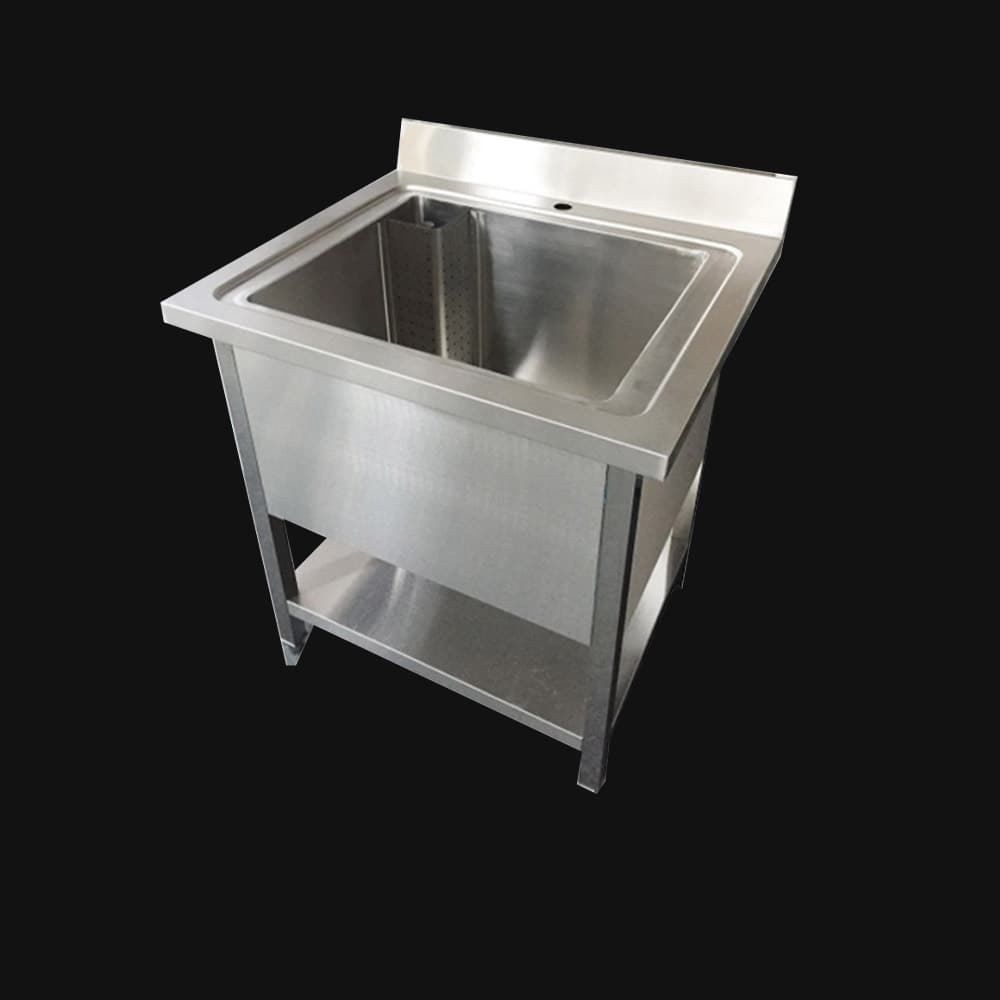
Scrape and pre-rinse. Plates arrive at a soiled table with a sink. A pre-rinse spray unit with a spring hose removes food before it reaches the machine, which keeps the tank water cleaner for longer.
Load racks. Staff sort and load racks on the soiled table so a rack is always ready.
Wash and rinse. The rack goes into the hood-type machine and the cycle runs.
Unload to the clean table. The rack slides out onto a clean table on the other side, away from the soiled side.
Dry and store. Items air-dry in the heat from the rinse, then go to shelves or racks. A wall-mounted shelf above the clean table saves floor space.
Wash hands. A pedal operator sink lets staff wash hands without touching taps between dirty and clean tasks.
Dishwashing station checklist
Component
Job
What to check
Soiled table and sink with pre-rinse spray
Scrape, rinse and sort before loading
Spring hose reach, water pressure range, drain point and sink depth
Hood-type or other machine
Wash, rinse and sanitise racks
Rack size, cycle times, rinse temperature, power and clearance height
Clean table
Receive racks and allow drying
Length to hold at least two racks, splashback and a slight fall away from the machine
Pedal operator sink
Hand washing without touching taps
Hot and cold supply, location between soiled and clean sides
Grease trap interceptor
Stops fats and oils reaching the drain
Size against flow, location and access for cleaning
Shelving and rack storage
Keep clean items off the floor
Height, load capacity and distance from the splash zone
Power, plumbing and drainage: what to prepare before delivery
Dishwashers are often delivered to a site that is not ready for them. A short checklist avoids that:
Electrical supply. Larger machines with booster heaters are normally three-phase. Our hood-type model is listed at 9.5 kW, three-phase, 380 V. Smaller undercounter units are often single-phase but check the data sheet of the model you choose.
Water inlet. Check required pressure and the incoming water temperature. A hot feed shortens cycle time and reduces booster load.
Drainage. A floor drain close to the machine, or a drain pump, depending on level. Hot, detergent-laden water leaves the machine, so check pipe materials.
Grease control. Sinks and the pre-rinse area send fats to the drain. Whether and where a grease trap is required is set by the authority, so confirm with your consultant. Our grease trap interceptor is SUS304, multi-baffle, from 15 to 100 L, up to 40 L/min, under-sink or floor-mounted in-line. See also our page on grease traps in Dubai.
Steam and heat. Hood-type machines release steam when the door is opened. A condensate extract above the machine keeps the room dry. This is covered in our kitchen hood guide.
Space and access. Leave room to open the hood, to pull the machine out for service, and to reach the drain and water valves.
Daily cleaning, descaling and the hygiene routine
A machine that is cleaned every day lasts years longer and washes better. A simple routine for a hood-type machine:
End of every shift. Drain the tank, remove and rinse strainers and scrap trays, wipe out the chamber and leave the door open so it dries.
Wash arms and nozzles. Check and clear them daily. Blocked jets are the commonest cause of poor results.
Weekly. Check dosing lines and chemical levels, and clean the rinse arm.
Descale on the schedule set by your water hardness, using the descaler the manufacturer recommends.
Keep records. Many kitchens log rinse temperature and chemical checks as part of their HACCP plan. HACCP is a documented system for the whole kitchen, not a feature of one machine, so ask your food-safety consultant what to record.
Where it is used
Restaurants
A hood-type machine with a loading table and a clean table keeps up with a busy dining room without needing a second dishwasher.
Hotel kitchens and banquet service
Banquets produce large waves of dishes at once. Conveyor machines or several hood-type machines clear the peak, with separate glass and pot-wash areas.
Cafes, bars and pastry counters
Undercounter machines and glasswashers fit small back areas and handle cups, glasses and small plates all day.
Staff canteens and camps
High volume at fixed meal times, which suits a hood-type or conveyor line with simple, robust controls.
Central and cloud kitchens
Pans, trays and containers need tall clearance and a pre-rinse area. A hood-type machine with a proper station keeps turnaround short.
Caterers
Large volumes of crockery return from events. A compact in-line station gets them clean and back on the truck quickly.
Benefits
Machine and station designed together
Pre-rinse, sink, tables and grease trap are chosen to match the machine, so the flow works from the first service.
Built-in dosing and booster
Our hood-type model lists built-in dosing pumps and a booster heater, so there are fewer add-ons to specify separately.
SUS304 throughout
Machine body, tables and sinks in the same grade of stainless steel, which is easier to keep clean.
Tables made to your layout
Soiled and clean tables are custom-fabricated to your drawing, so heights and lengths line up with the machine.
Honest sizing advice
We would rather help you choose a machine that fits your peak hour than oversell a bigger one.
Related products
Equipment from the FIAMMA range that goes with this page.
What is the difference between a commercial and a household dishwasher?
A commercial dishwasher runs short cycles of 1 to 3 minutes, uses a separate hot final rinse, injects detergent and rinse aid through pumps, and is built from stainless steel for continuous use. A household unit is built for one load a day and is not designed for service volume.
What is a hood-type dishwasher?
It is a pass-through machine with a hood that you lift or slide to load a rack, then close for the cycle. Racks go in on a loading table and come out on a clean table on the other side. It sits between an undercounter machine and a full conveyor.
How many racks per hour does a commercial dishwasher handle?
As an indicative guide, undercounter machines handle roughly 20 to 40 racks an hour, hood-type machines roughly 30 to 60, and conveyor machines from about 100 upward. Our hood-type model is listed at up to 60 racks an hour. Real output depends on loading speed and cycle length.
What temperature should the final rinse reach?
Thermal sanitising machines commonly rinse at around 80 to 90 °C. Our hood-type model lists an 80 to 85 °C final rinse. What your inspector or auditor expects should be confirmed with Dubai Municipality or your food-safety consultant.
Do I need a water softener?
It depends on your water. Hard water causes scale on heaters and nozzles and leaves spots on glasses. Test your supply, ask the machine supplier for the maximum hardness it tolerates, and fit a softener or filter if the water is hard.
What power supply does a hood-type dishwasher need?
Machines with a booster heater are normally three-phase. Our hood-type model is listed at 9.5 kW, three-phase, 380 V. Check the data sheet of any machine you compare, and confirm the supply with your electrical contractor.
Do I need a grease trap with a dishwasher?
Grease trap requirements are set by the authority and the building, and depend on what drains where. Sinks and pre-rinse areas normally carry the fats. Confirm with your consultant. Our grease trap interceptor is available from 15 to 100 L.
How often should a commercial dishwasher be descaled?
It depends on water hardness and use. Weekly to monthly is common. Follow the manufacturer's descaler instructions, and keep strainers and spray arms clean every day.
Can you supply the pre-rinse unit, sink and tables as well?
Yes. We supply a pre-rinse spray unit, a pedal operator sink and a grease trap interceptor, and custom-fabricate soiled and clean tables in SUS304 to your drawing, so the whole station comes from one source.
Do you supply commercial dishwashers outside Dubai?
Yes. We supply across the UAE, including Abu Dhabi, Sharjah, Ajman, Ras Al Khaimah, Fujairah and Umm Al Quwain.
Send your covers per hour, the space available and the kitchen layout. We will suggest a machine type and a station layout, and come back with a quotation.