First-time restaurant owners
Use the cost drivers and the three-tier phasing plan to decide what must be bought before opening and what can wait for the first months of trading.

There is no single price for a commercial kitchen in Dubai, because cost follows your menu, your covers and the building. The biggest drivers are equipment class, stainless steel material and gauge, capacity, gas or electric, brand level, custom versus standard fabrication, hood length and duty, and installation and utility works. Budget from an itemised equipment schedule, then add the hidden costs.
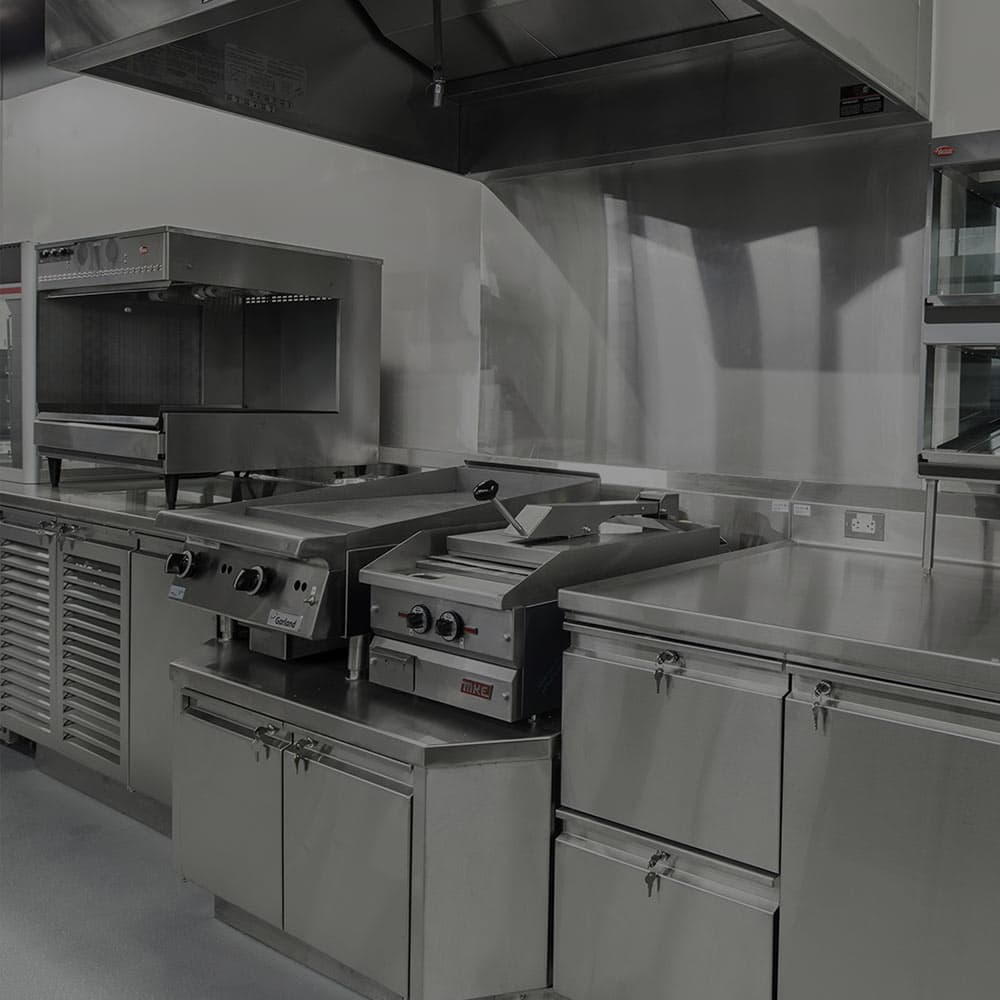
Ask five suppliers how much a restaurant kitchen costs and you will get five different answers, and every one of them can be honest. A 40-seat cafe with a single range and a pastry display is a different project from a 150-cover restaurant with a grill line, a walk-in room and a dish-wash area. A number given before the equipment schedule exists is a guess.
This guide does not quote prices. It shows you what moves the cost of each type of equipment, how a budget is normally divided, which costs get missed, and how to read quotations so that you are comparing like with like. When your schedule is ready, send it through the contact page and ask for an itemised quotation. If you are still working out the sequence of a project, read the commercial kitchen setup checklist alongside this page.
Seven things decide the final figure on almost every project. Notice that the size of the room is not one of them. Cost follows what you cook and how much of it you cook at once.
The table below goes through the main classes you will buy. It is written to help you decide what to specify and what to ask. It does not give prices, because those depend on model, brand and the date of the quotation.
| Equipment class | What pushes the cost up | What you can control | Ask for in the quotation |
|---|---|---|---|
| Cooking: ranges, fryers, ovens | Number of burners or wells, power rating, built-in oven or cabinet base, controls, fuel type. A gas cooking range with 6 burners at up to 15 kW each carries more than a 4-burner model. | Size the line to your real menu. Decide LPG or natural gas early, because it changes burner jetting. | Burner count and kW, fuel type, frame material, optional extras listed separately. |
| Refrigeration and display | Internal volume, number of doors, display glass, temperature range (chiller or freezer), refrigerant, compressor brand. | Choose chiller or freezer by what you store. Our chiller vs freezer guide helps avoid paying for freezing you do not need. | Internal volume, temperature range, power supply, whether shelves and castors are included. |
| Stainless steel fabrication: tables, sinks, shelves, cabinets | Sheet thickness, grade, length, number of undershelves, drawers and doors, welded splashbacks, sink bowl size. | Standardise dimensions across the kitchen so more items repeat. See custom stainless steel fabrication. | Grade and gauge in writing, dimensions, finish, leg type, drawing for approval. |
| Extraction hoods | Length, duty class of the equipment below, filter type, built-in suppression or water mist, collar size, ducting and fan, which are often a separate scope. | Keep the cooking line compact. Every extra metre of hood adds fabrication, ducting and exhaust airflow. | Length, gauge, filter count, whether fan and ducting are included. See our kitchen hood guide. |
| Dishwashing and grease management | Machine type (undercounter, hood-type or conveyor), booster heater, water softener, pre-rinse sink, drainage, grease trap size. | Match machine type to plate count at peak. Plan drainage and the trap before ordering. | Utilities needed (power, water, drain), trap capacity, included sinks and spray units. |
| Food preparation machines | Motor power, bowl or hopper capacity, safety features, number of attachments. | Buy for the volume you really prepare. A mixer that is too large wastes space and power. | Attachments included, capacity, power supply, spare blades and parts. |
| Pantry and beverage | Brand, number of groups or bowls, plumbing, water filtration, chilling. | Decide whether you need a full machine or a smaller unit that suits your opening menu. | Water and drain connections, filter included, power supply. |
We will not give you percentages, because they vary with concept, building and landlord. The order of the blocks is more reliable than the proportions, and it is the order that tells you where to spend your attention.
On most restaurant projects the two largest blocks are the equipment package and the building works that serve it (ventilation, electrical, plumbing, drainage, gas and fire protection). Which one is larger depends on the unit. A shell with no kitchen services pushes the second block up. A site that was a restaurant before pulls it down.
These rarely appear in a headline equipment price. None of them is unusual, but each can add up if it is discovered on site instead of at quotation stage.
Refurbished equipment is attractive when the budget is tight, and it can work well for items with no moving or refrigerating parts. It deserves more care for anything that runs hard every day.
Stainless steel tables, shelving, sinks and cabinets are the best candidates: a clean, sound frame does not wear out like a motor. Refrigeration, fryers, ovens and dishwashers are riskier, because condition, spare-part availability and remaining life are hard to see from outside.
Two quotations for the 'same' kitchen can differ by a large amount and still be honest. The usual cause is not margin, it is scope: one quote includes delivery, installation and a hood with filters, and the other quietly leaves them out. Use this table to check every quotation you receive, and ask each supplier to fill the gaps in writing.
| Item | What the quotation should state | Why it matters |
|---|---|---|
| Model and specification | Brand, model number, key dimensions, capacity, power or gas rating | Stops substitution later and lets you check it against your layout |
| Material and gauge | Stainless steel grade (for example SUS304) and sheet thickness for every fabricated item | Thickness is the main difference between two tables that look alike |
| Drawings | Whether a drawing is provided for approval, and who owns changes | Custom items must be approved before fabrication starts |
| Included accessories | Shelves, filters, castors, attachments, taps, drain fittings | Small items are the usual source of extras |
| Delivery | Where, when, who offloads, who pays for the lift or crane | Delivery to site and delivery to the final position are different things |
| Installation and commissioning | Included or excluded, and who connects utilities | The biggest scope gap between quotations |
| Spares and service | Availability of parts, service contact, warranty terms as written | You will need them, so check before you buy |
| Lead time | A delivery period stated in the quotation, and what could change it | Needed for your opening plan and for deciding what to order first |
| Exclusions and validity | What is not included, how long the offer is valid, payment terms | Avoids disagreements on the day of the invoice |
FIAMMA supplies commercial kitchen equipment and custom-fabricated stainless steel items made to your drawing, so most quotations start from your equipment schedule and layout. We do not publish a price list for projects, because a custom extraction hood cut to 3 m is not the same item as one cut to 5 m, and a fabricated infill table depends on its dimensions and gauge.
What we can do is itemise the quotation clearly, state the material and thickness of each fabricated item, and tell you which items you will need to coordinate with your MEP contractor. Ask for lead time, delivery and installation scope in writing, as in the table above. If you are choosing between a supplier, a fabricator and a full contractor, our manufacturer vs supplier vs turnkey guide lays out the trade-offs. You can also browse our restaurant kitchen equipment range to see what a typical line includes.
Use the cost drivers and the three-tier phasing plan to decide what must be bought before opening and what can wait for the first months of trading.
Lighter cooking plant and heavier refrigeration and display. The refrigeration and display sections of the table matter most here.
Cooking-heavy lines in small units, where hood length and utility capacity decide the budget more than the equipment list.
The quotation table can be handed to suppliers as the basis for pricing, so that every bid covers the same scope.
Replacing equipment on existing services is cheaper than starting from a shell, and the hidden-cost list shows what to check before you order.
Knowing why equipment costs what it does lets you adjust the right variable when the budget is tight.
The hidden-cost list moves delivery, installation, utilities and approvals into the plan before they become extras.
The checklist table turns different quotations into like-for-like scopes.
The three-tier approach protects the items that cannot be changed later.
Equipment from the FIAMMA range that goes with this page.

Heavy-duty SUS304 stainless steel extraction canopy engineered for high-heat commercial cooking lines. Integrated baffle grease filters, welded drip channels, and an optional built-in water mist fire suppression manifold contain grease-laden vapor and suppress flare-ups at the source, keeping kitchens compliant with UAE Civil Defence fire-safety codes.

Heavy-duty open-burner gas cooking range built on a fully welded SUS304 stainless steel frame for continuous high-volume service. Cast-iron pan supports, independent burner valves, and an optional oven base combine high-heat output with the durability commercial kitchens demand day after day.

Single-door commercial upright freezer with forced-air ventilated cooling. Built with thick cyclopenthane insulation, self-closing magnetic door gaskets, digital control panel, and adjustable heavy-duty shelves. Designed to operate efficiently in hot kitchen environments up to 43°C ambient temperature.

Heavy-duty commercial pass-through hood type dishwasher designed for inline installations with entry and exit tables. Features a high-pressure wash pump, automated dosing pump for rinse aid and detergent, 3 wash programs (60, 90, 120 seconds), and built-in booster heater for 85°C sanitizing final rinse.
Send your equipment schedule and layout. We will itemise each item, state the material and thickness, and note what needs coordinating with your MEP team.
Last updated: