Cafes and bakeries
One or two sinks and light grease. An under-sink trap is often enough, provided it can be reached for cleaning.

A grease trap sits between your kitchen sinks and the drain and slows the wastewater so fats, oils and grease float to the top and stay behind. FIAMMA supplies a SUS304 multi-baffle grease trap interceptor from 15 to 100 L, rated up to 40 L/min, for under-sink or floor-mounted in-line fitting.
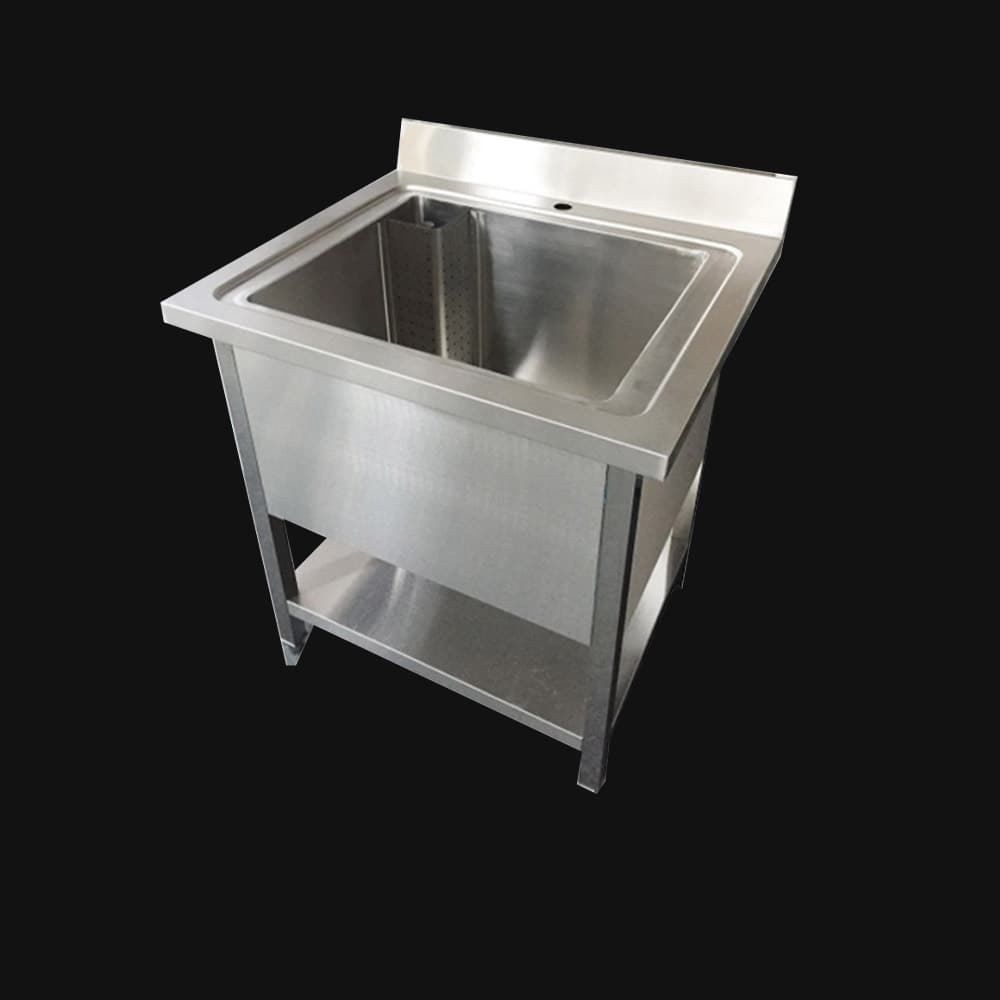
Grease problems rarely show up on opening day. They show up three months in, when the pot-wash drain starts gurgling, the kitchen smells of old fat, and a plumber is called to cut out a plug of white grease from the pipe. By then the trap is either too small, in the wrong place, or has not been cleaned.
This page explains what a grease trap does, which type fits which kitchen, how to size one by flow rate with a worked example, how to clean it, and the mistakes that come up most often. If you are planning the whole wash area, read it alongside our notes on commercial dishwashers and the kitchen hood above your cooking line, because grease reaches the drain from both directions.
Fats, oils and grease (often shortened to FOG) are liquid when hot and solid when cold. Poured down a drain, they cool in the pipe, stick to the walls and build up until the line blocks. A grease trap is a small tank placed in the waste line that gives the water time to slow down and cool, so grease rises and stays in the tank while cleaner water flows out underneath.
Inside the tank, baffles do most of the work. They force the water to change direction and break up the flow, which lets the grease separate. In a multi-baffle design like ours there are several stages, and the heavier food solids settle at the bottom while grease collects at the top.
There are three common arrangements. Which one fits depends on how many fixtures drain into it, how much floor space you have, and how much grease the kitchen produces.
| Trap type | Where it sits | Typical use | Things to know |
|---|---|---|---|
| Under-sink trap | Directly under one sink or pre-rinse station | Cafes, small restaurants, cloud kitchens, a single wash point | Small footprint and short pipe run. Limited volume, so it needs cleaning more often. Check the cabinet space and access for lifting the lid. |
| Floor-mounted in-line trap | On the floor beside or under the wash area, in line with the waste pipe | Restaurants and hotel outlets with a pot-wash sink and a dishwasher | More volume and a higher flow rating than an under-sink unit. Needs floor space and a clear route for the pipe. This is the format FIAMMA's 15 to 100 L trap covers. |
| Larger external interceptor | Outside the building, below or above ground, on the main kitchen drain | Central kitchens, large hotels, food courts, high-volume frying | Handles combined flow from many fixtures. Needs civil works, access for a tanker, and approval of the location. Normally designed with the building's drainage. |
The simplest sizing method starts with the peak flow your fixtures can put into the trap, in litres per minute. You then choose a trap whose rated flow is at least that figure. The figures below are indicative, to show the method. A plumbing consultant confirms the design for your kitchen.
Step 1: find the bowl volume. Multiply length × width × depth of each sink bowl, in millimetres, and convert to litres.
Step 2: apply a fill factor. Bowls are rarely filled to the brim, so a factor of about 0.75 is commonly used.
Step 3: assume a drain-down time. One minute is a common assumption for the time a bowl takes to empty. A longer assumed time gives a lower flow figure.
Step 4: add fixtures that can drain together. If a dishwasher or pre-rinse sink discharges at the same time, add its flow.
| Input | What to note | Effect on trap size |
|---|---|---|
| Sink bowl size | Length × width × depth of each bowl | Larger bowls give a higher peak flow when emptied. |
| Fixtures draining together | Pot-wash bowls, pre-rinse sink, dishwasher outlet, floor drains | Flows add up when they discharge at the same time. |
| Cooking style | Heavy frying, grilling and roasting put more fat in the water than boiling or salads | Heavier grease load means a larger tank or more frequent cleaning. |
| Hot water | Temperature of dishwasher and sink discharge | Very hot water carries grease through. Cool it before the trap where the design requires. |
| Cleaning routine | How often a team can realistically empty the trap | A trap that will be cleaned rarely should be larger. |
Most failed traps were not bad products. They were installed or run in a way that stopped them working. These are the problems that come up most often:
A trap needs cleaning when the grease layer reaches roughly a quarter of its depth. For a busy passive trap that is often every one to four weeks, and sooner in a fry-heavy kitchen. Grease and waste taken out of the trap should leave the site only with a licensed collector, and the municipality commonly expects records.
In general terms, food businesses in the UAE are commonly expected to treat kitchen wastewater with a grease trap before it reaches the public sewer. The trap is usually sized to the flow, installed where it can be reached for cleaning, and emptied on a regular schedule by a licensed waste collector, with records kept.
Dubai Municipality publishes a grease trap guideline, and free zones and other emirates have their own authorities and rules. Accepted trap models, documents and the approval route can differ between them. Confirm the current requirements for your site with your consultant and the authority before you buy.
The FIAMMA trap is described by its specification: SUS304 stainless steel, multi-baffle, 15 to 100 L, up to 40 L/min. Approval of any trap for your project rests with the authority.
FIAMMA supplies a stainless steel grease trap interceptor in SUS304 with a multi-baffle design. It is offered from 15 to 100 L, rated up to 40 L/min, for under-sink fitting or as a floor-mounted in-line unit.
Stainless steel suits a trap because it does not crack under hot water, is easy to scrub and lasts well in a wet, greasy environment. Our SUS304 and SUS316 guide explains when the higher grade is worth paying for. Traps pair naturally with a pedal operator sink and a pre-rinse spray unit at the wash station. If you need the sink and the surrounding stainless made to your drawing, see our custom stainless steel fabrication.
One or two sinks and light grease. An under-sink trap is often enough, provided it can be reached for cleaning.
A floor-mounted in-line trap sized to the pot-wash sink and any dishwasher outlet keeps the main drain clear.
Continuous frying and high turnover mean fast grease build-up. Size the trap generously and plan a tight cleaning schedule.
Several wash points feed one drain. Calculate the combined flow and decide between one larger unit or separate traps.
Flow and grease load are high. These sites usually need a larger external interceptor designed with the building drainage.
SUS304 construction resists hot water and cleaning, and does not crack or warp.
Several stages slow and separate the flow, so grease stays in the tank rather than passing through.
Under-sink for a single wash point, or floor-mounted in-line for a wash area with more flow.
We help you check the peak flow against the trap's rating before you order.
Same SUS304 as our sinks, spray units and dishwashers, so the station fits together.
Equipment from the FIAMMA range that goes with this page.
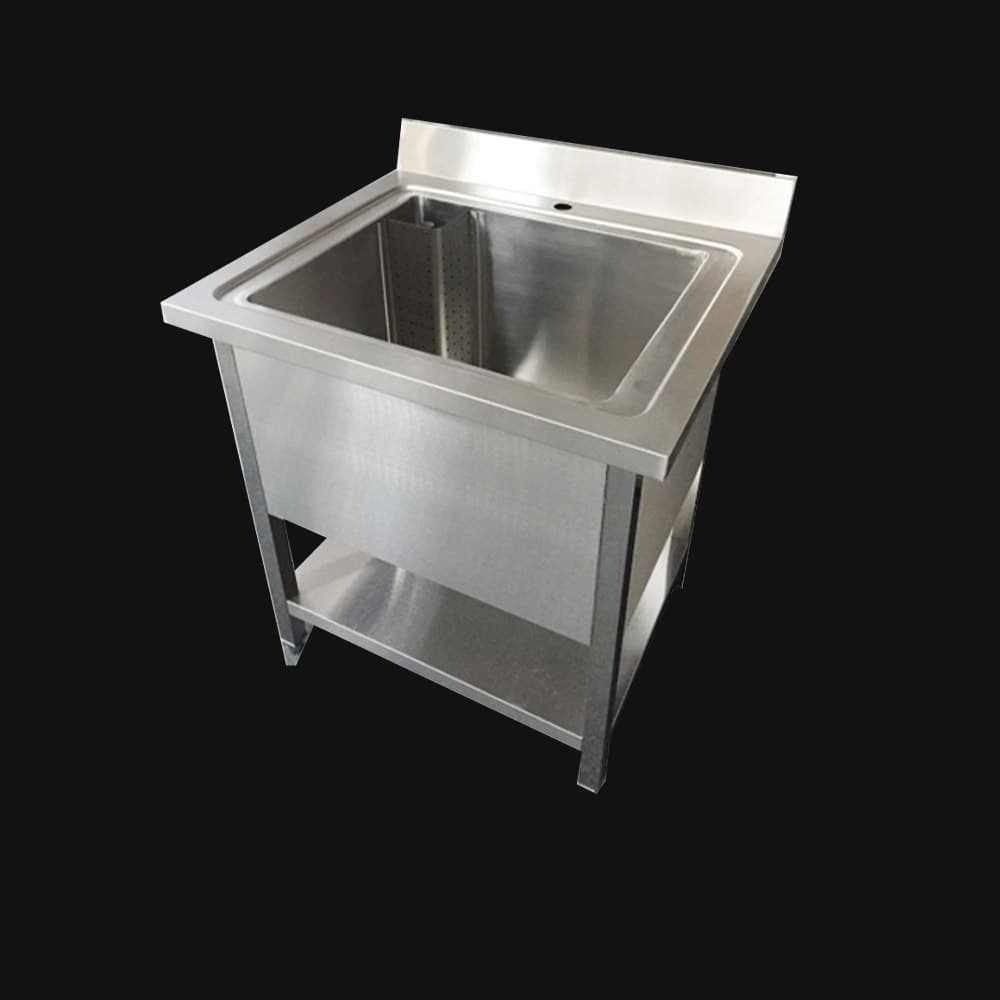
Under-sink or in-line stainless steel grease trap engineered to intercept fats, oils, and grease before wastewater reaches municipal drainage. Baffled internal chambers slow flow to separate FOG from water, helping commercial kitchens meet UAE municipality drainage compliance and avoid blocked lines.
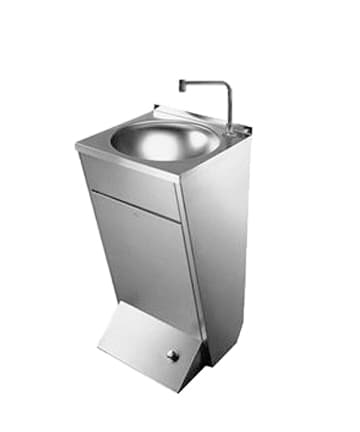
Hygienic hands-free wash basin with integrated foot pedal operation. Specifically designed to meet HACCP food safety standards in prep areas, kitchens, and toilets. Comes complete with a stainless steel gooseneck faucet, soap dispenser mount, and rear splashback.
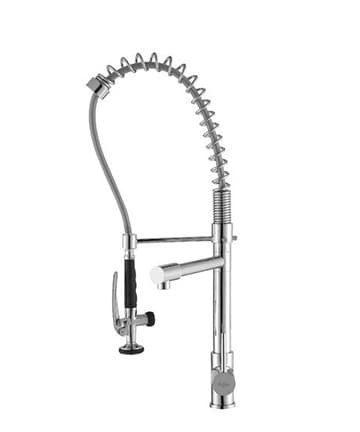
Heavy-duty deck-mounted pre-rinse spray unit with a flexible spring neck. Features a high-flow spray valve, heavy-duty brass internal body, double-jointed add-on faucet, wall bracket for support, and heat-resistant squeeze handle. Essential for scraping residues before washing.
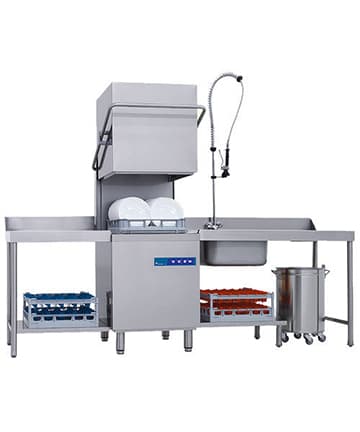
Heavy-duty commercial pass-through hood type dishwasher designed for inline installations with entry and exit tables. Features a high-pressure wash pump, automated dosing pump for rinse aid and detergent, 3 wash programs (60, 90, 120 seconds), and built-in booster heater for 85°C sanitizing final rinse.
Send your sink sizes and the equipment that drains to them. We will check the peak flow and recommend a trap size and fitting.
Last updated: